
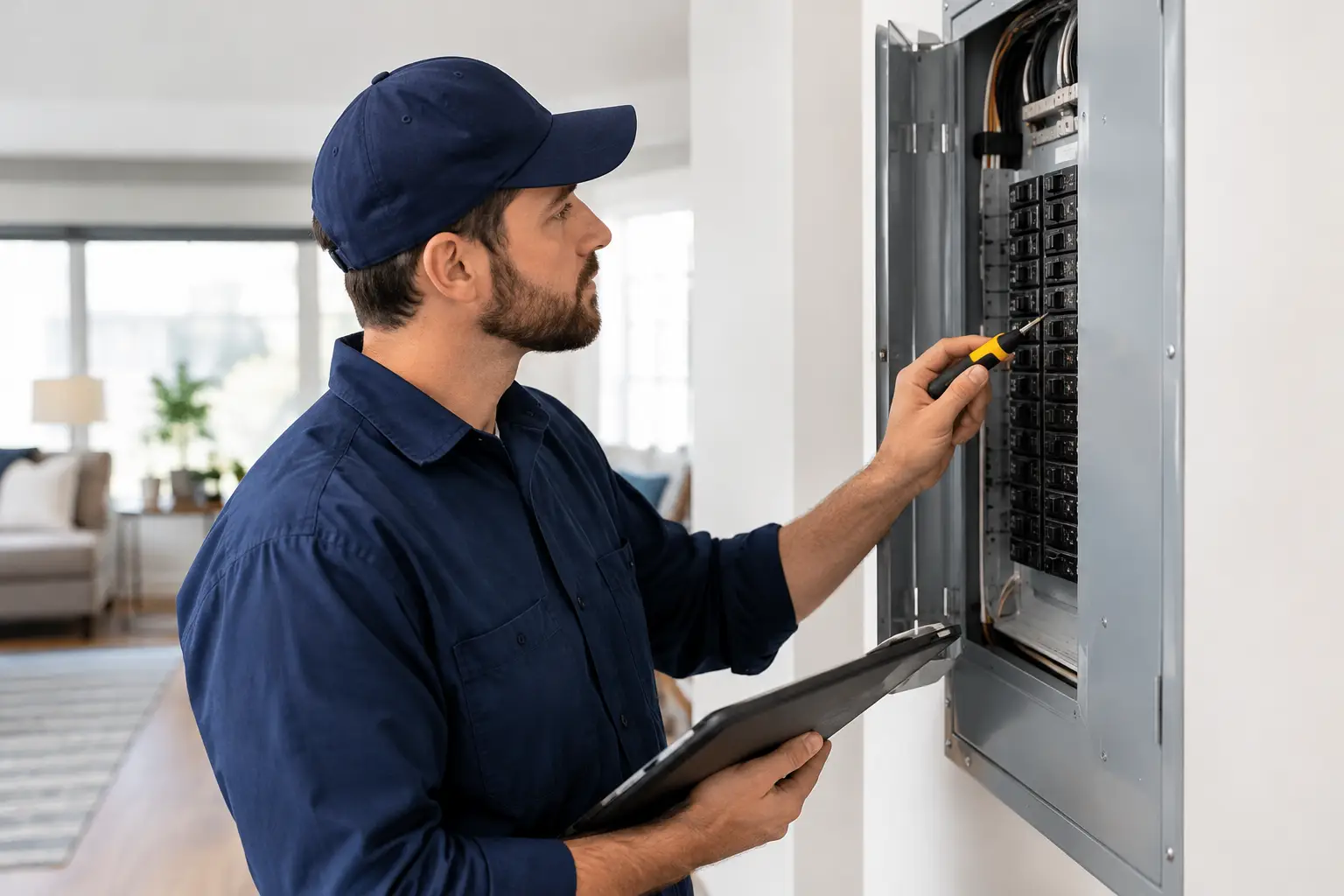
A tenant reports a tripping circuit on a Sunday evening, or a letting agent finds an old fuse board during a routine visit. These are the moments when electrical safety checks for rental property become more than a compliance task. A safe, documented installation protects tenants, reduces avoidable disruption and gives landlords clear evidence that they have acted responsibly.
For rental homes in Bristol, Bath and Newport, the key document is usually an Electrical Installation Condition Report, known as an EICR. It assesses the fixed electrical installation - the consumer unit, wiring, sockets, switches, lighting circuits and permanently connected equipment - and identifies whether the installation remains safe for continued use.
What an EICR checks in a rental property
An EICR is not a quick visual look at a fuse board. A qualified electrician carries out inspection and testing across the installation, using appropriate test equipment and safe isolation procedures where required. The report considers the condition of the wiring, earthing and bonding arrangements, circuit protection, signs of overheating or damage, and whether the installation meets the safety standards applicable to its age and condition.
Older properties often need closer attention. Bristol and Bath have many period homes that have been extended, converted into flats or altered over several decades. It is common to find mixed-age wiring, added sockets, outdated protective devices or alterations with little supporting paperwork. That does not automatically mean the property requires a full rewire, but it does mean assumptions should not replace proper testing.
The electrician will also check whether protective measures such as RCD protection are present where expected, and whether the consumer unit can safely isolate and protect each circuit. A modern consumer unit is not compulsory simply because a property is old. However, an upgrade may be the most practical route where the existing board cannot provide the protection needed, is damaged, or has reached the end of its safe serviceable life.
Electrical safety checks for rental property: landlord duties
In England, private landlords must ensure that electrical installations are inspected and tested by a qualified and competent person at intervals of no more than five years. A new inspection may be needed sooner if the previous report specifies a shorter interval, or if significant electrical work, damage or concerns warrant further assessment.
Landlords must keep the report, provide it to existing tenants within the required timescale, give it to new tenants before they move in, and make it available to a prospective tenant who requests it. Local authorities can also request a copy. The exact deadlines matter, so records should be kept with the tenancy paperwork rather than left until a renewal is due.
Rental requirements in Wales are administered differently from those in England, and terminology such as occupation contract is used in place of tenancy. Welsh landlords must also ensure the electrical installation is inspected and tested at least every five years, with reports provided to contract-holders within the relevant statutory timeframes. For landlords or agents operating across Bristol, Bath and Newport, it is sensible to manage each property according to the rules that apply in its location rather than treating the region as one compliance area.
An EICR is part of the picture, not the whole picture. Duties relating to smoke alarms, carbon monoxide alarms, gas safety, fire safety in larger or shared properties, and general repairs sit alongside electrical obligations. A clear property file makes it easier to demonstrate that these responsibilities are being managed properly.
Understanding EICR observations and remedial work
An EICR will normally record observations using classification codes. These help the landlord understand what needs action and how urgently.
A C1 observation identifies danger present. The electrician may need to make the issue safe immediately, with the landlord’s authority. A C2 observation indicates a potentially dangerous condition that requires urgent remedial work. FI means further investigation is required without delay because the electrician cannot confirm that an aspect of the installation is safe. Any of these outcomes will result in an unsatisfactory report until the necessary work and confirmation have been completed.
A C3 observation is a recommendation for improvement. It does not, on its own, make the report unsatisfactory. For example, an installation may not reflect every feature of current wiring regulations but can still be safe for continued use. This distinction matters for landlords budgeting improvements: not every recommendation requires immediate replacement work, but known risks should never be deferred.
Once remedial work has been completed, retain the paperwork that confirms the work undertaken and that the installation is satisfactory. This could be a satisfactory EICR after repairs, or documentation linked to the original report where appropriate. The aim is a complete audit trail, not simply a passed certificate.
When to arrange an inspection
The five-year interval is the maximum for many rented homes, not a reason to wait where warning signs appear. Arrange an electrician sooner if tenants report repeated tripping, shocks or tingling from metal fittings, burning smells, warm sockets, flickering lights, damaged accessories or water ingress near electrical equipment. Do not ask tenants to keep resetting a circuit breaker if it continues to trip. That protective device is responding to a fault that needs investigation.
Inspection is also sensible before a new tenancy where the property has been vacant, after substantial refurbishment, following a flood or leak, or when buying a property intended for letting. A pre-tenancy EICR allows remedial work to be planned before tenants move in, rather than creating access issues and inconvenience later.
Letting agents and portfolio landlords benefit from a forward diary. Record the report date, recommended next inspection date, certificate location, any remedial actions and the date documents were issued to occupants. For a larger portfolio, this simple process helps avoid certificates expiring unnoticed between renewals and maintenance calls.
Fixed wiring, appliances and tenant communication
The EICR covers the fixed installation, not every electrical item in the property. Portable appliances supplied by the landlord - such as kettles, lamps, microwaves or washing machines - should be maintained in a safe condition. Portable appliance testing, often called PAT testing, can be a useful part of that maintenance programme, particularly in furnished homes or managed accommodation, but it is not a substitute for an EICR.
Landlords should also distinguish between a tenant’s belongings and landlord-supplied equipment. Tenants remain responsible for their own appliances, although a report of damage or an electrical fault should always be taken seriously. Clear move-in information can help: explain where the consumer unit is located, advise tenants not to overload extension leads, and provide a simple route for reporting faults promptly.
Avoid unqualified alterations between inspections. Adding a socket, replacing a consumer unit, extending a circuit for a kitchen refit or installing an electric shower may involve notifiable work and should be designed, installed and certified correctly. Cheap, undocumented work can become costly when an EICR identifies faults, particularly in converted or multi-let properties.
Choosing an electrician for rental compliance
The report is only as dependable as the inspection behind it. Choose an electrician with the competence, test equipment and current knowledge to inspect rental installations properly. NICEIC approved electricians offer additional reassurance that work is assessed through a recognised competent-person scheme, while the completed report provides the documentation landlords, agents, insurers and tenants may need.
Before booking, confirm the property type, number of consumer units, any outbuildings, electric heating, EV charging point, solar equipment and known faults. A small modern flat and a large converted Victorian house do not require the same scope of work. Providing accurate details helps produce a realistic quotation and allows enough time for a thorough inspection.
CRS Electrical provides EICRs, remedial work, consumer unit upgrades and wider domestic electrical services for landlords and property managers across Bristol, Bath and Newport. A free quote can help establish the likely scope before work is scheduled.
A current, satisfactory report should be treated as a working safety record rather than a document to file away. Keep it accessible, act quickly when tenants raise concerns, and plan remedial work before a minor defect has the chance to become a serious disruption.