
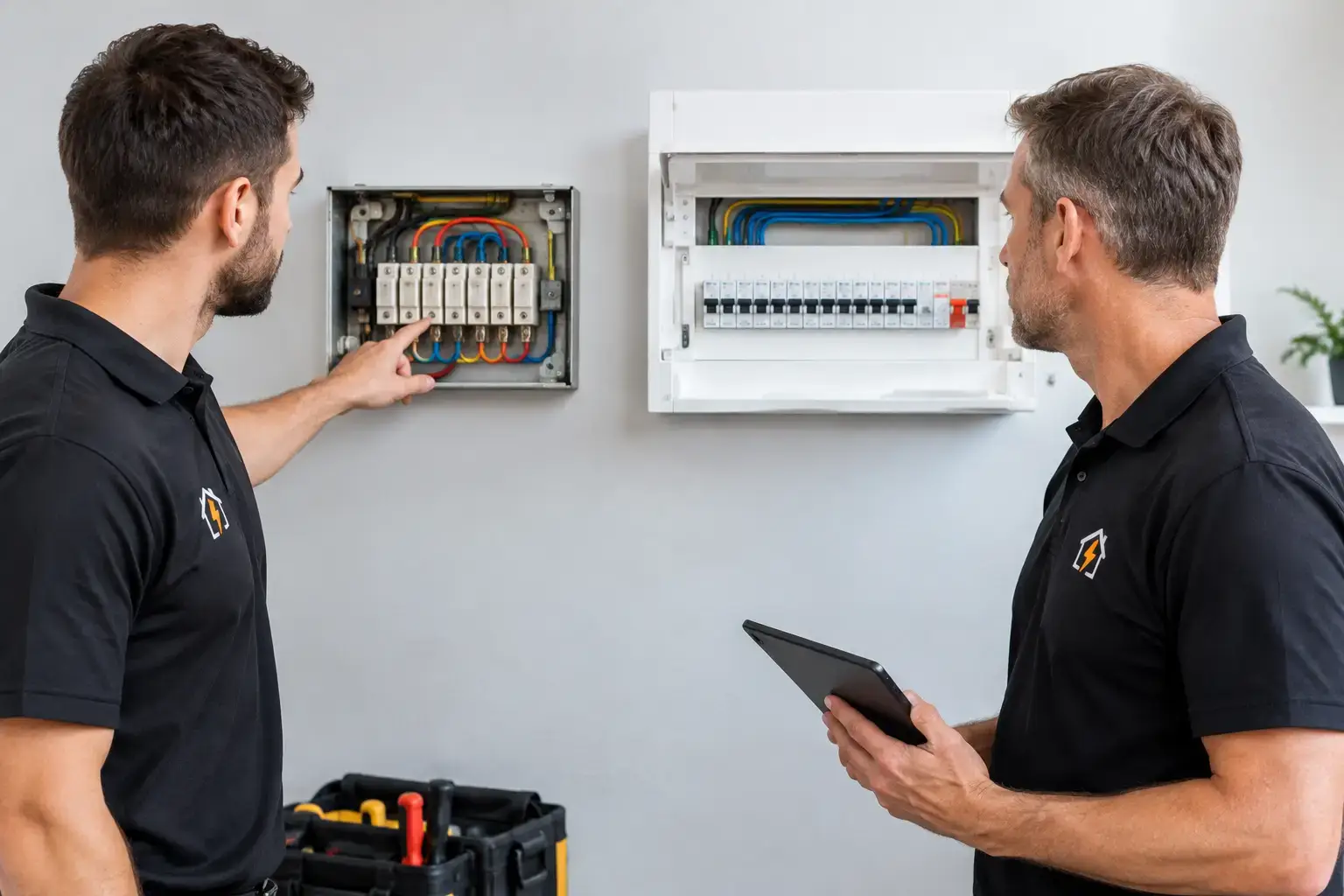
A fuse box versus consumer unit question often comes up when a property has an EICR, a new kitchen planned, or an electrician has identified ageing electrical equipment. The two terms are commonly used interchangeably, but they usually describe very different levels of protection. Knowing the difference helps homeowners, landlords and business owners make a sensible decision about electrical safety, compliance and future improvements.
Fuse Box Versus Consumer Unit: The Main Difference
A traditional fuse box is an older style of electrical distribution board. It divides the installation into separate circuits, such as lighting, sockets, the cooker and shower. If a fault or overload occurs, the fuse operates to disconnect the affected circuit.
Many older boards use rewireable fuses. These contain a thin piece of fuse wire that melts when too much current passes through it. The wire then needs to be replaced before the circuit can be used again. Some later fuse boards use cartridge fuses, which are replaced as a complete unit.
A modern consumer unit performs the same basic job of distributing electricity and protecting circuits, but it uses current protective devices designed for quicker reset, clearer fault finding and improved safety. Instead of replacing fuse wire, a miniature circuit breaker, known as an MCB, trips and can usually be reset once the cause of the fault has been addressed.
More importantly, modern consumer units generally include RCD or RCBO protection. These devices are designed to disconnect the supply rapidly where they detect an earth leakage fault, helping to reduce the risk of electric shock and fire. They are a major reason an upgrade may be recommended, particularly in homes with old wiring or circuits serving kitchens, bathrooms and outdoor equipment.
Why Older Fuse Boxes Can Be a Concern
A fuse box is not automatically unsafe simply because it is old. Its condition, installation quality, earthing arrangements, circuit design and the work carried out since it was fitted all matter. A well-maintained older installation may continue to operate, but it may not provide the level of protection expected for a modern property.
Rewireable fuses can be inconvenient, but the bigger concern is that they are easier to misuse. Incorrect fuse wire can be fitted, or a fault can be repeatedly reset without finding the underlying problem. Older boards may also lack RCD protection, have damaged covers, poorly labelled circuits or limited capacity for additional electrical work.
Properties have changed considerably since many fuse boxes were installed. A typical household may now have more kitchen appliances, home office equipment, electric showers, garden supplies, electric heating, solar equipment or an EV charger. These additions place greater demands on the electrical installation and may require dedicated circuits, suitable protective devices and an assessment of the property supply.
For landlords and property managers, the issue is often identified during an Electrical Installation Condition Report. An EICR assesses the condition of fixed wiring and equipment against the relevant safety requirements. It does not mean every older consumer unit must be replaced, but it can identify defects, inadequate protection or issues that need remedial work before a satisfactory report can be issued.
What a Modern Consumer Unit Offers
A consumer unit upgrade is not just a cosmetic replacement of the board on the wall. It is an opportunity to review the safety of the installation and provide suitable protection for the circuits it serves.
Modern units commonly include MCBs or RCBOs, RCD protection and clear circuit labelling. RCBOs provide individual protection for each circuit, which can be useful where continuity matters. If one circuit develops a fault, it is less likely to take out several other circuits at the same time. This can be particularly useful in properties with refrigeration, alarms, IT equipment or tenants who need clear separation between circuits.
Surge protection devices may also be appropriate. These help protect sensitive electronic equipment from transient voltage surges, which can arise from events such as network switching or lightning activity nearby. Whether surge protection is needed depends on the installation, the equipment present and the outcome of an electrician's assessment.
The enclosure itself matters too. Current consumer units are usually metal-clad and designed to meet modern fire containment expectations. A proper installation also includes testing, circuit identification and certification, not simply fitting a new board.
A Consumer Unit Cannot Fix Every Fault
Replacing a fuse box does not make defective wiring safe by itself. If testing reveals damaged cables, poor connections, inadequate earthing or circuits that do not meet the required standard, these issues need to be addressed as part of the work or separately.
This is why a reputable electrician will inspect and test before confirming the scope of an upgrade. In some properties, especially those that have been altered over many years, a partial rewire or full rewire may be more appropriate than fitting a new consumer unit onto an ageing installation.
When Is an Upgrade Worth Considering?
An upgrade is often sensible when a property has a rewireable fuse box, no RCD protection, visible damage, overheating, repeated tripping or poorly identified circuits. It is also commonly considered before major refurbishment, a kitchen extension, loft conversion, new shower circuit, EV charger installation or solar electrical work.
For a homeowner, the decision often comes down to safety and future plans. If you are already opening walls, replacing a kitchen or investing in an electric vehicle, dealing with the distribution board at the same time can avoid disruption later.
For landlords, a consumer unit upgrade may be driven by EICR findings or the need to remedy identified issues. The report should guide the work required. It is better to act on a clear inspection and quotation than to assume a board replacement is the answer in every case.
Commercial properties require the same practical approach, with additional consideration for operational downtime, emergency lighting, specialist equipment and the need to maintain safe working conditions. A consumer unit upgrade may need to be planned around trading hours or carried out in stages to minimise disruption.
What Happens During a Consumer Unit Replacement?
Before work begins, the electrician should assess the existing installation, discuss any known faults and establish what circuits are present. Testing is essential because the protective devices selected must be suitable for the circuit wiring and the characteristics of the supply.
On the day, the electricity supply will normally need to be isolated while the old board is removed and the new consumer unit is installed. The duration varies with the number of circuits, condition of the wiring and any remedial work needed. A straightforward domestic replacement may be completed in a day, while a more complex property can take longer.
Once installed, the circuits are tested and labelled. You should receive the relevant electrical certification for the work. Where notification is required under Building Regulations, this should be handled by the registered contractor. Keep the paperwork with your EICR, electrical plans and other property records, as it can be useful for insurance, a future sale, tenancy compliance and later electrical alterations.
Choosing the Right Electrician in Bristol, Bath and Newport
Consumer unit work should be completed by a properly qualified, competent electrician, not treated as a DIY task. The board is the point where every circuit in the property is protected, so correct selection, installation and testing are essential.
Using NICEIC approved electricians provides reassurance that the work is carried out within a recognised competent person framework and that appropriate certification can be issued. Ask whether the quotation includes inspection, testing, certification, labelling and any necessary remedial work. A low initial figure may not include the work required to make an older installation suitable for a new consumer unit.
CRS Electrical provides domestic and commercial consumer unit upgrades, EICRs, rewires, EV charger installations and solar electrical work across Bristol, Bath and Newport. A site assessment and clear quotation can establish whether a replacement is needed now, what work is involved and how the installation can be prepared for the way you use the property.
If your fuse box is old, damaged, regularly trips or does not appear to have modern protective devices, arrange a professional inspection rather than waiting for a failure. It is a practical step towards a safer property and a better foundation for future electrical improvements.