
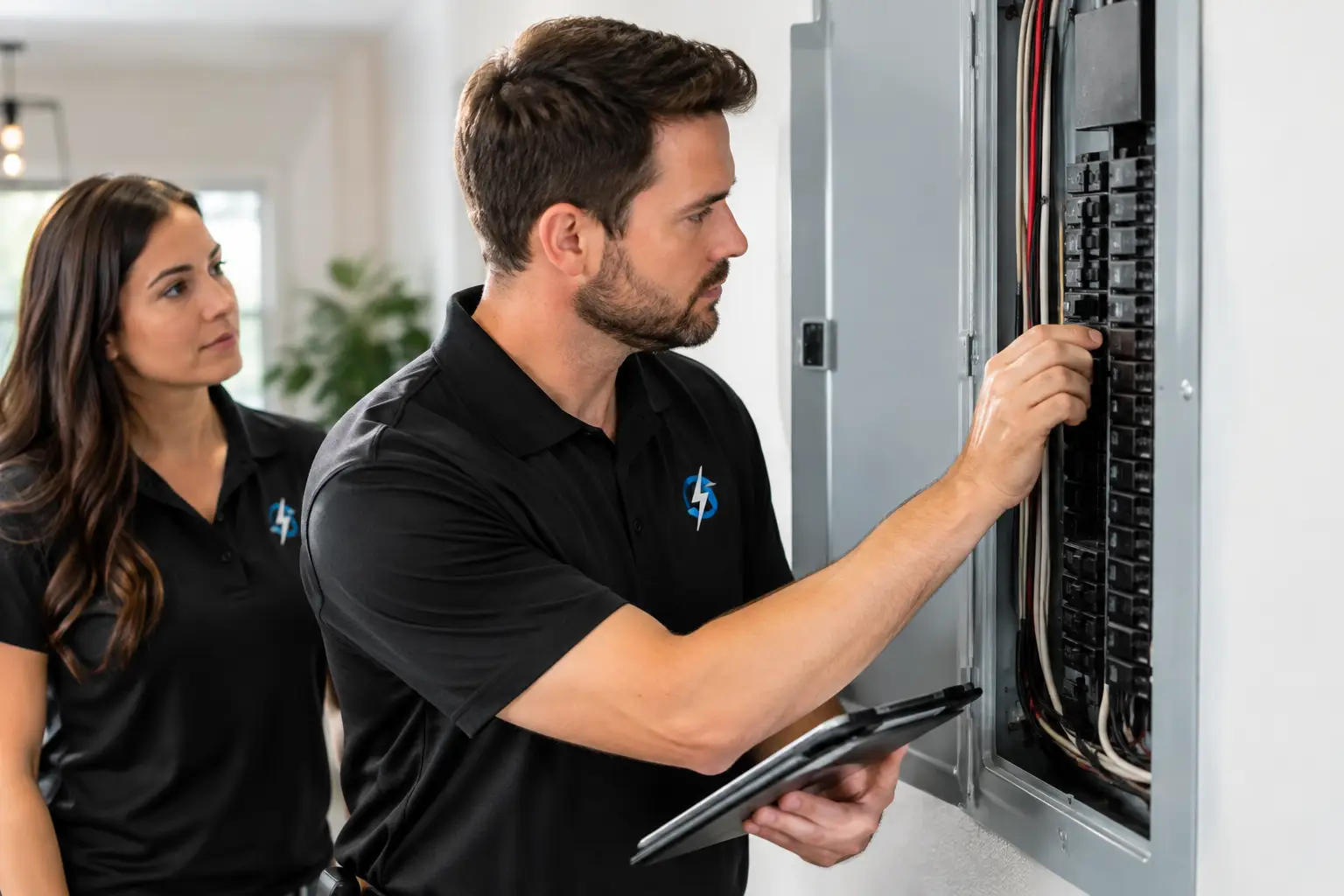
A tripped circuit breaker is rarely random. It has detected a condition that could damage cables, appliances or the electrical installation itself, then disconnected the supply to reduce the risk. Understanding what causes a circuit breaker to trip can help you take sensible first steps, but repeatedly resetting it without finding the fault is never a safe fix.
Modern consumer units use protective devices designed to respond quickly. In many Bristol, Bath and Newport properties, that may mean a miniature circuit breaker (MCB), a residual current device (RCD), or an RCBO that combines both forms of protection. The switch that has moved to the off position offers an important clue, although a qualified electrician may still need to test the circuit to identify the underlying cause.
What causes a circuit breaker to trip?
A circuit breaker normally trips because the circuit is carrying more current than it is designed for, or because it has detected a fault. Those are different problems, and the safe response can depend on which protective device has operated.
An MCB generally protects against overloads and short circuits. An RCD or RCBO is designed to detect electricity leaking from the circuit, potentially towards earth, which can indicate a risk of electric shock or fire. In plain terms, an MCB may trip because too much equipment is running, while an RCD may trip because an appliance, cable or connection has developed a fault.
An overloaded circuit
Overloading is one of the most common causes. It happens when several high-demand appliances are supplied by the same circuit at once. A kitchen circuit, for example, may trip if a kettle, toaster, microwave, air fryer and portable heater are all operating together. Extension leads and multi-way adaptors can make this easier to do without realising the total load involved.
An occasional overload does not necessarily mean the wiring is defective. It may simply mean the way the circuit is being used needs to change. However, if normal day-to-day use trips the breaker regularly, the property may need additional circuits, improved socket provision or a consumer unit upgrade. This is especially common in older homes that were not designed around modern kitchen equipment, home working or electric heating.
A short circuit
A short circuit occurs when live and neutral conductors come into direct contact. This can happen inside a damaged appliance, a worn flex, a loose connection, a light fitting or the fixed wiring. The current rises very rapidly, so the MCB should trip almost immediately.
Do not keep trying to reset a breaker that trips instantly. Unplugging appliances on that circuit can help establish whether one item is the issue, but damage within fixed wiring must be inspected and tested by a competent electrician. Signs such as burning smells, discolouration around sockets, crackling, heat or visible damage require urgent attention. Leave the circuit switched off.
Earth leakage and RCD tripping
If the RCD, or an RCBO marked with a test button, has tripped, the cause may be earth leakage. This means a small amount of current is taking an unintended route to earth. Damp can contribute to this, particularly in outdoor circuits, bathrooms, garages, sheds and older accessories. Faulty appliances are also a frequent cause, including washing machines, dishwashers, ovens, immersion heaters and outdoor equipment.
An RCD can trip even where an appliance appears to work normally. The fault may be intermittent, arising only when the appliance heats up, when moisture is present, or after it has been running for a period. That is why an RCD trip should not be ignored simply because resetting it restores the power.
Faulty or ageing appliances
An appliance with a damaged plug, crushed cable or internal defect can trip a breaker as soon as it is plugged in or switched on. Portable heaters, kettles, irons, lawn equipment and older white goods are common suspects because they draw significant current or are regularly moved, stored or exposed to moisture.
A straightforward check is to unplug every appliance from the affected circuit before attempting one reset. If the circuit stays on, reconnect items one at a time. If it trips when a particular appliance is connected, stop using that appliance and arrange repair or replacement. Do not use a different fuse, adapt the plug or rely on an extension lead as a workaround.
Damaged wiring, sockets or light fittings
Not every fault is caused by something plugged in. Cables can be damaged by drilling, DIY work, rodent activity, water ingress or deterioration in older installations. Loose terminals at sockets, switches and light fittings can also overheat or create intermittent faults. A circuit may trip only when a particular light is switched on, a socket is used, or a cable is disturbed.
Properties undergoing refurbishment deserve particular care. Adding a new kitchen, converting a loft, installing a garden office or changing lighting can place new demands on existing circuits. Electrical work should be correctly designed, tested and certified, rather than added onto an already overloaded or ageing installation.
Outdoor moisture and weather exposure
Water and electricity do not mix, and external electrics are a common source of RCD trips. Rainwater entering a damaged outside socket, a garden light, pond equipment or a poorly protected cable can create earth leakage. The problem may appear after heavy rain, frost or a period of high humidity, then disappear once conditions dry out.
Switch off the affected outdoor circuit if you can identify it safely. Avoid touching wet electrical equipment or opening external fittings. A qualified electrician can inspect the accessories, test insulation resistance and replace unsuitable or damaged components with equipment appropriate for its location.
Consumer unit or protective-device faults
Less commonly, the breaker or RCD itself may be faulty, incorrectly selected, poorly connected or no longer suitable for the installation. Consumer units are safety-critical equipment, so this is not a job for guesswork. A professional inspection can determine whether the device has failed or whether it is responding correctly to a fault elsewhere on the circuit.
Older fuse boards may lack the protection expected in a modern installation. Upgrading to a new consumer unit can improve circuit separation and protection, but it is not a cure for existing faults. The installation should be inspected, tested and brought to a satisfactory condition as part of any properly planned upgrade.
What to do when a breaker trips
First, turn off or unplug appliances on the affected circuit. Look for obvious damage, overheating, water exposure or a smell of burning, but do not remove socket fronts, open fittings or investigate inside the consumer unit. If there are no warning signs, reset the tripped device once by moving it fully to off before returning it to on.
If it remains on, reconnect appliances gradually. If it trips again, or will not reset, leave it off. Repeatedly forcing a breaker back on can allow a fault to worsen and may remove the only protection preventing cable damage or electric shock.
Call an electrician without delay if the consumer unit is hot, there is smoke, sparks, burning, buzzing, water near electrical equipment or a persistent loss of power. In an emergency where there is immediate danger, isolate the supply if it is safe to do so and seek urgent assistance.
When the problem needs an electrician
A single overload caused by running several appliances may be manageable by reducing demand. Regular trips, instant trips, RCD trips, unexplained faults and faults affecting fixed wiring need proper diagnosis. Electrical testing identifies what visual checks cannot: insulation damage, loose connections, polarity issues, inadequate circuit capacity and deteriorating components.
For landlords, letting agents and business owners, a recurring trip is also a compliance issue. Electrical installations must be maintained in a safe condition, and formal inspection through an EICR can highlight defects before they lead to disruption, property damage or failed safety obligations. Commercial premises may be particularly affected by overloaded small-power circuits, kitchen equipment, IT loads and alterations made over time.
CRS Electrical provides NICEIC approved domestic and commercial electrical work across Bristol, Bath and Newport, including fault finding, consumer unit upgrades, rewires and EICRs. A clear diagnosis and the right certification give property owners more than a temporary reset - they provide confidence that the circuit is safe to use.
If a breaker has tripped once, treat it as useful information. If it trips again, leave the circuit off and have the cause checked before normal use resumes.